Repairing a Classic Car After Accident Damage
Specialist Restoration with a Focus on Originality
An accident involving a classic car is always serious. With a historic or collectible automobile, repairing the visible damage is only part of the challenge. A classic car often represents a combination of history, originality, rarity and financial value. That is why repairing a classic car after accident damage requires a specialist approach.
A dent, damaged body panel or broken bumper may initially appear straightforward. However, there can be much more damage beneath the surface. Previous repairs, restoration work and the availability of original parts can all have a significant impact on the repair process.
Heritage Cars assists owners of exclusive classic cars throughout the entire process. From the initial inspection and communication with the insurance company to finding specialist craftsmen, original parts, bodywork specialists and paint professionals, the objective is always the same: to restore the car carefully while preserving its character, originality and value.
Repairing a classic car after accident damage requires a different approach
Modern vehicles are generally repaired using standardized procedures and readily available replacement parts. Classic cars are very different.
Parts may no longer be manufactured or may only be available through specialist suppliers and collectors. Body panels may originally have been shaped by hand, while specific construction methods and materials may be impossible to replace with modern alternatives. Every classic car is also unique because of its history and the work that has been carried out during its lifetime.
For that reason, proper accident repair does not begin with simply replacing or straightening a damaged component. It begins with a careful assessment of the vehicle. Whathas actually been damaged? Which components can be repaired? Are there signs of previous repairs? Which parts are original? And which repair method is most appropriate for this particular car?
Only after these questions have been answered can a responsible repair plan be established.
Thoroughly assessing the damage
Following an accident, it is important to document and inspect the damage comprehensively. This means looking beyond visible bodywork and checking areas such as the suspension, drivetrain, cooling system, engine bay and other mechanical components.
Even a relatively minor collision can affect components that are not immediately visible. Structural damage can also influence the fit and alignment of doors, the bonnet, boot lid and other body panels. A detailed inspection therefore provides a much clearer picture of the repair required and reduces the risk of discovering significant additional damage halfway through the project.
Heritage Cars looks at the vehicle as a whole, assessing the damage in relation to the car’s construction, specification, history and original condition.
Preserving original components whenever possible
When repairing a classic car after accident damage, replacing a damaged component is not always the best solution.
An original body panel, for example, may be carefully straightened and reshaped. This preserves not only the original component itself, but also the way in which the vehicle was originally constructed.
If a component cannot be repaired safely or correctly, the next tsep is to find a suitable replacement. With rare classic cars, this can involve an extensive search. Original parts may only be available through specialist suppliers, collectors or international contacts.
The objective is not simply to make the car look good again. The solution must be appropriate for the vehicle and its history.
Specialist bodywork for classic cars
Bodywork is often one of the most important aspects of repairing accident damage to a classic car. The shape of a panel, the way seams meet and the thickness and structure of the material can all influence the final result.
Where possible, experienced specialists can repair the original bodywork rather than replacing it. Straightening, shaping, welding and hand-forming classic body panels require a high level of specialist craftsmanship.
In some cases, however, a damaged component may be beyond repair. If an original replacement cannot be sourced, a specialist may be able to reproduce the component according to the original shape and specifications.
This is about far more than achieving a flawless exterior. Correct dimensions, panel alignment, fit and structural integrity are equally important.
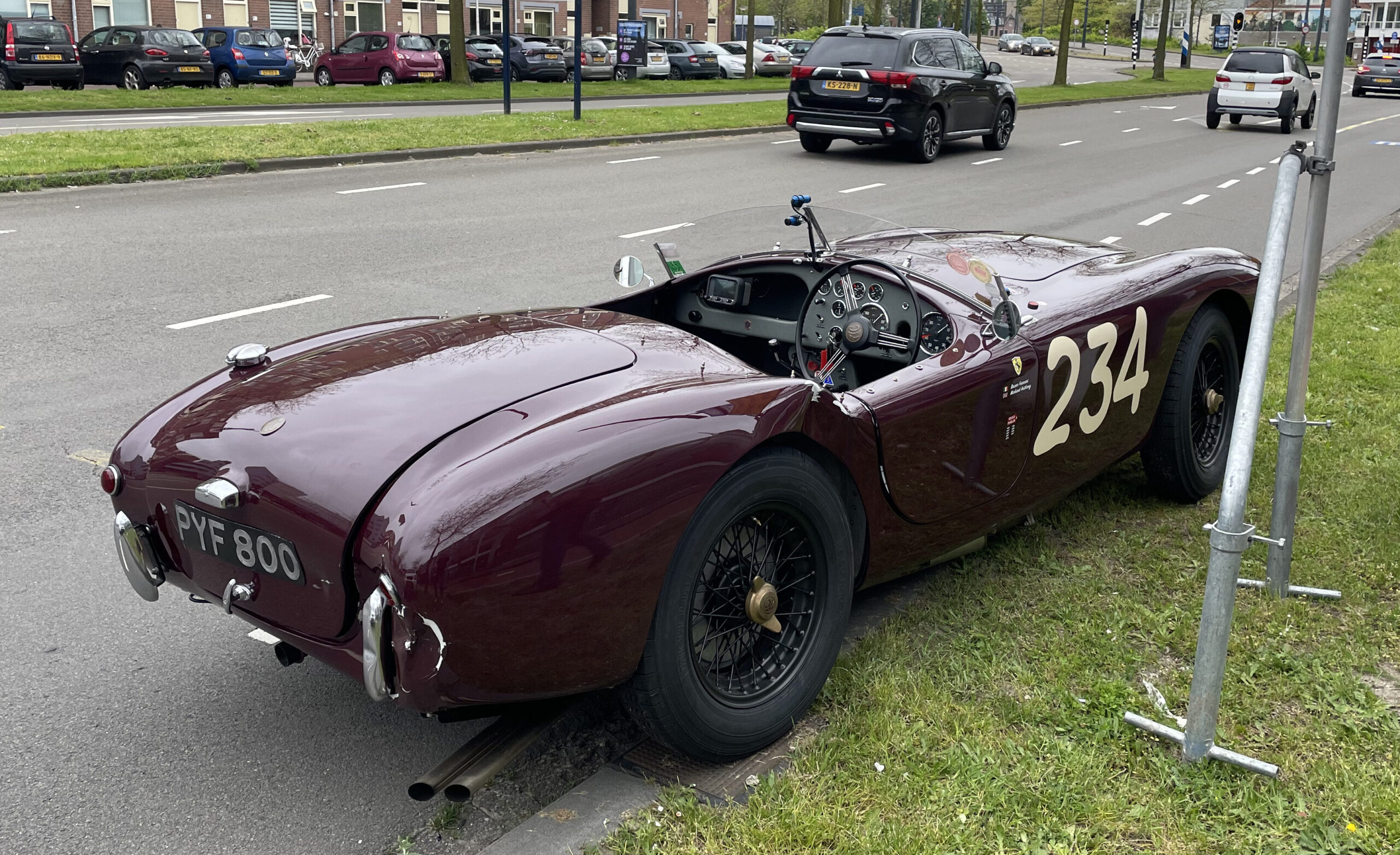
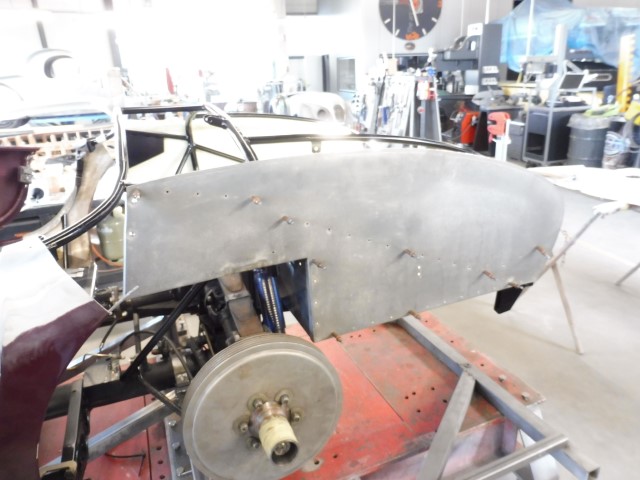
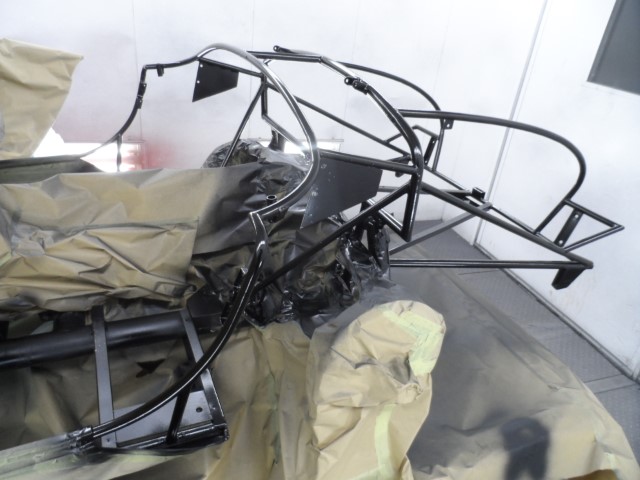
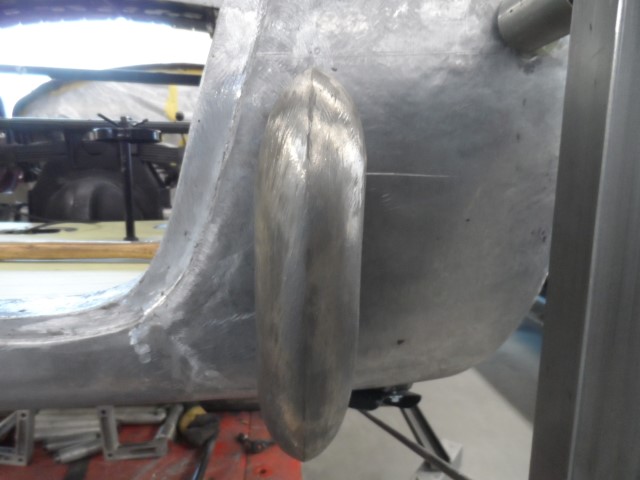
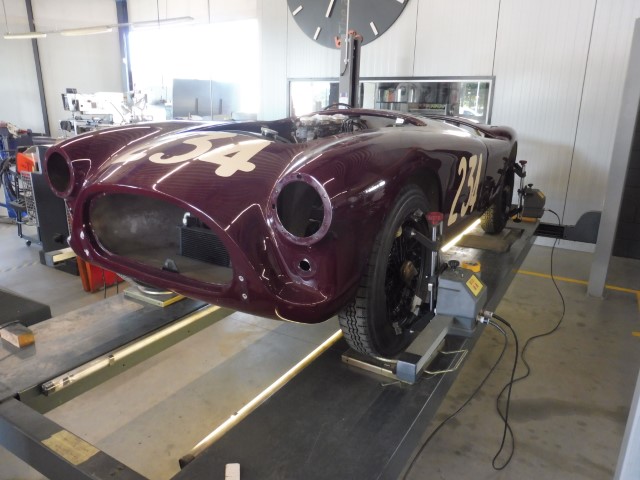
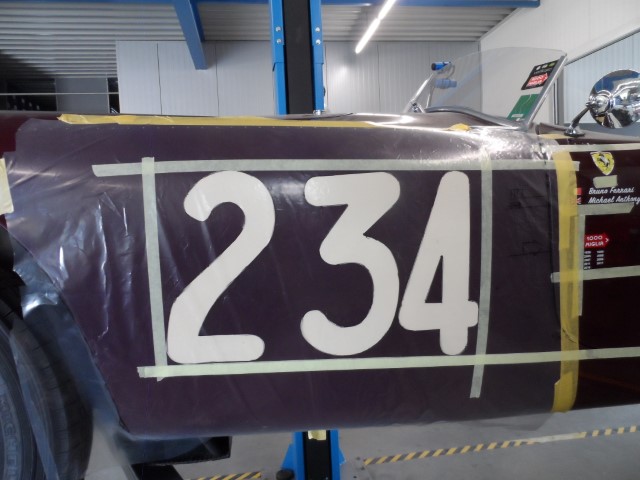
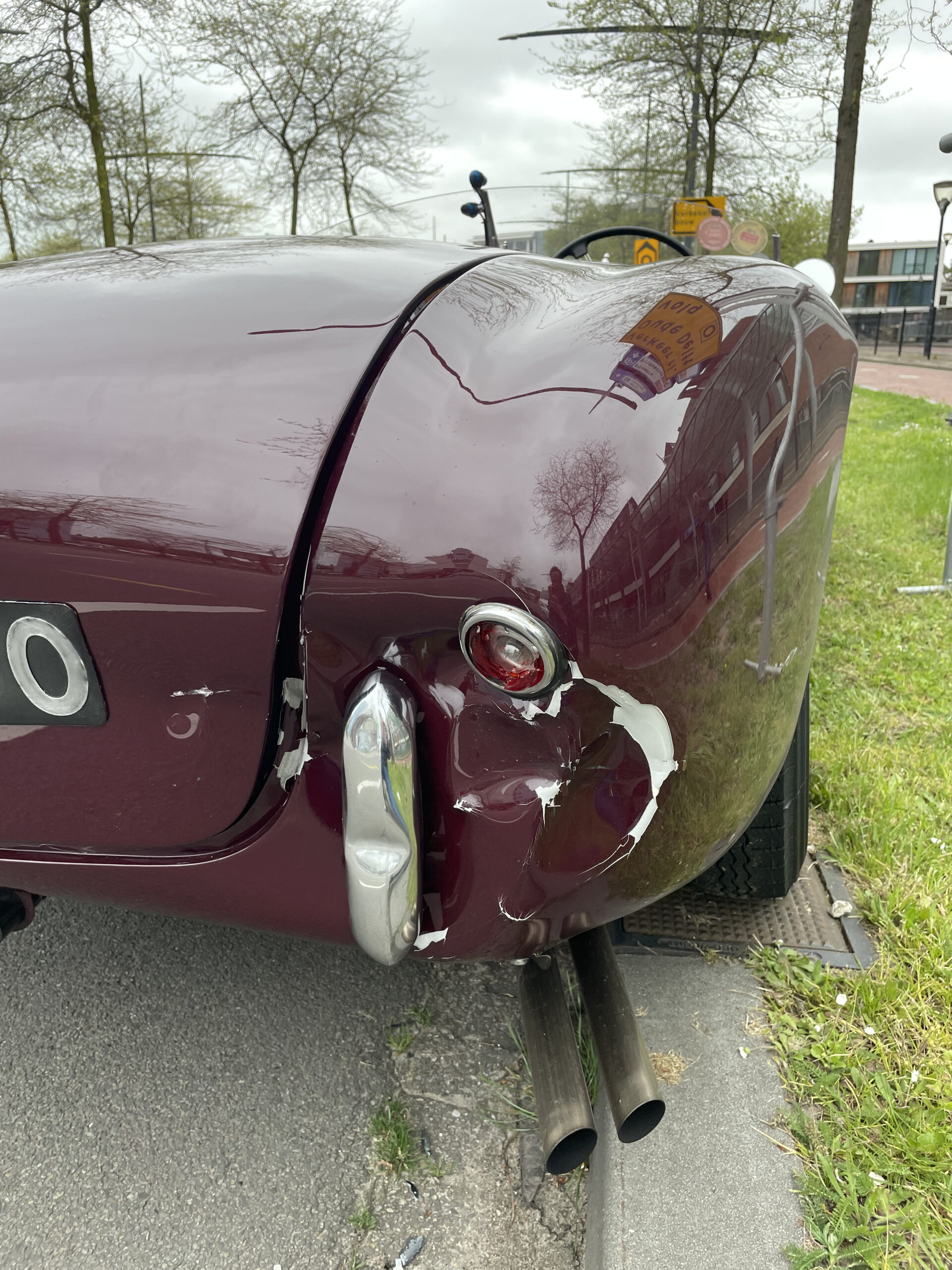
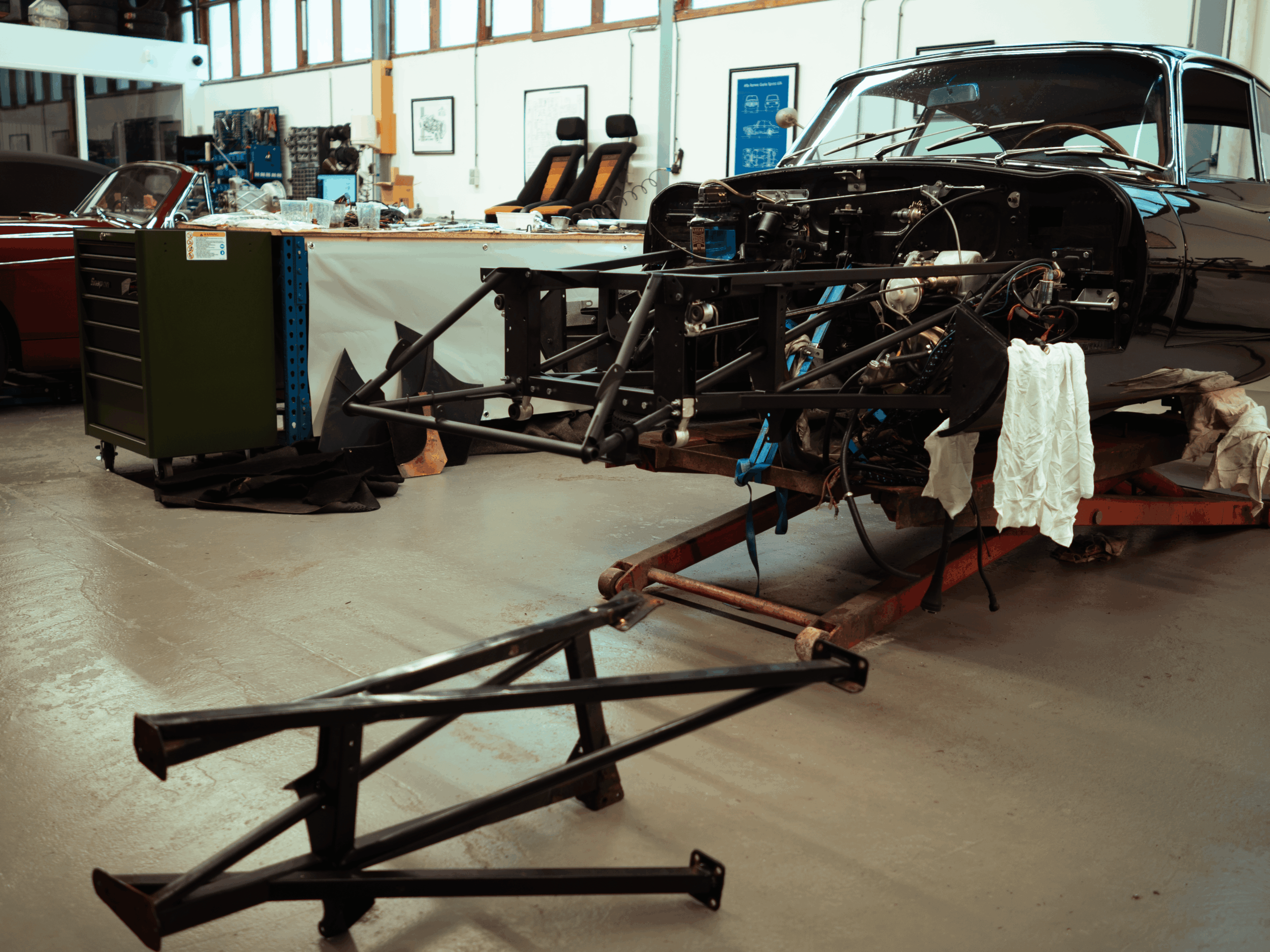
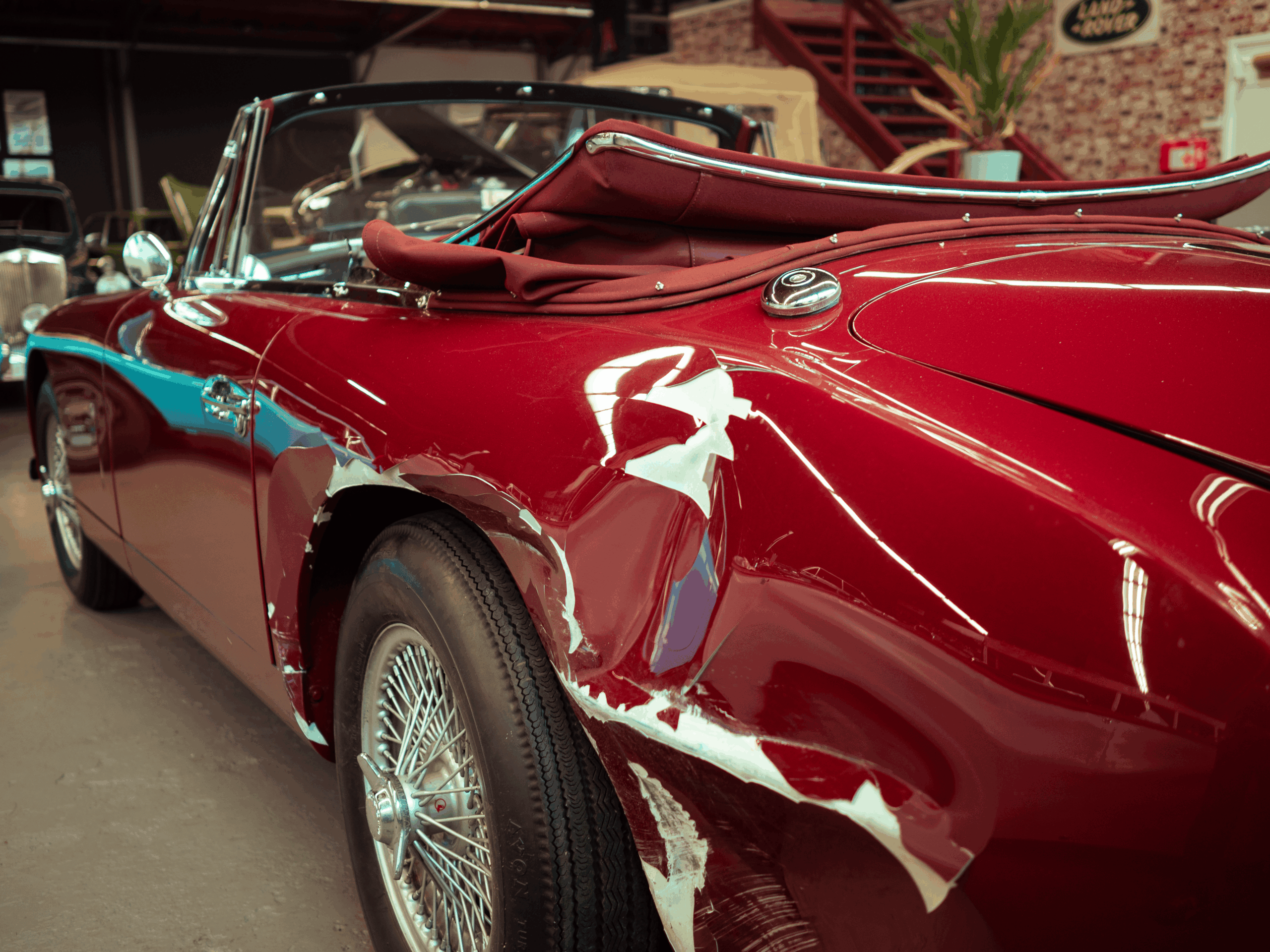
- The restoration process of a classic Ac Ace after it was involved in a collision on a public road. Despite the relatively minor collision, all the panels and the tubular frame were bent, resulting in an extensive restoration.
Previous repairs may become visible during the restoration
Accident repairs can sometimes reveal work that was carried out many years earlier.
Once old paint is removed, several layers of filler may be discovered. Previous welding, modified body panels or repairs that were not carried out to the original standard may only become apparent after the vehicle has been dismantled.
This is an important stage in the repair process. Simply covering up an old repair again is not necessarily the right solution. If previous work affects the quality, safety, originality or value of the vehicle, it should first be assessed properly. With a high-value classic car, the original repair plan may therefore need to be adjusted as the work progresses.
Paintwork: the repaired panel must match the rest of the car
Paintwork also requires particular attention when repairing a classic car.
After several decades, the paint on a classic vehicle may have developed a very specific appearance. The colour can have changed through exposure to sunlight, age and previous paintwork. Gloss level, texture and patina may also have become part of the character of the vehicle.
A newly painted panel can therefore be technically perfect and still look noticeably different from the rest of the car.
The right solution depends on the individual vehicle and the extent of the damage. In some cases, localized painting may be appropriate. In others, it may be better to repaint several panels or the entire vehicle.
With an exclusive classic car, the focus should always be on achieving a coherent and appropriate overall result.
Mechanical damage should also be inspected
An accident does not necessarily result in bodywork damage alone. Mechanical components may also have been affected.
This can include:
- suspension damage;
- steering or braking system damage;
- damage to the radiator or cooling system;
- engine or drivetrain damage;
- displaced or distorted mounting points;
- exhaust or other mechanical components.
With a classic car, these components should be professionally inspected rather than simply replaced without further assessment.
Heritage Cars can coordinate specialist mechanical work through its network of experienced professionals. This allows bodywork, mechanical repairs, parts sourcing and paintwork to be managed as one coherent restoration process.
Restoring a classic car while protecting its history and value
A classic car is more than a collection of components. Its history, specification, originality and previous restoration work are all part of what makes the vehicle special.
Accident repair should therefore not be judged solely by whether the visible damage has disappeared. The way in which the vehicle is repaired can also affect its future value and authenticity.
When repairing a classic car after accident damage, it is important to look beyond the immediate damage. Which original components can be retained? Which repair method is appropriate? Are original parts available? And how can the work be carried out while preserving the vehicle’s original character?
This broader approach is particularly important when dealing with rare and valuable classic cars.
From insurance assessment to final delivery
Following an accident, dealing with the insurance company can also become an important part of the process. With an exclusive or rare classic car, a proper assessment of the damage and the required repairs is particularly important.
Heritage Cars can assist the owner throughout the entire process.
This may include:
- inspecting and documenting the damage;
- assessing the mechanical and bodywork consequences;
- coordinating with the insurance company;
- preparing a repair plan;
- sourcing original or suitable replacement parts;
- selecting specialist bodywork and restoration professionals;
- coordinating mechanical repairs;
- overseeing paintwork;
- checking assembly and panel fit;
- and carrying out a detailed final inspection.
This way, you have a single point of contact, while the right specialist can be brought in for each specific procedure.
Has your classic car been damaged in an accident?
A classic car that has suffered accident damage deserves specialist attention. Whether the damage is relatively minor bodywork damage, the result of a serious crash, or a combination of bodywork and mechanical damage, a thorough assessment should always be the first step.
Heritage Cars assists owners of exclusive classic cars throughout the complete accident repair process. From insurance assessment and damage inspection to specialist repairs, original parts, bodywork, mechanical work and paintwork.
Has your classic car been damaged in an accident and would you like to know the best way to approach the repair?
Contact Geert Kistemaker at Heritage Cars.
Geert Kistemaker
+31 6 24276296
geert@heritagecars.nl
More information about repairing damage to classic cars: